











Choosing a database platform is one of the most important technology decisions an organization can make.
Your database is not simply a storage system.
It is the foundation of your:
- ERP software
- Accounting systems
- CRM platforms
- Inventory management
- HRM systems
- Business intelligence reports
- Customer applications
The wrong database choice can lead to:
- Performance issues
- Security risks
- Scalability limitations
- Increased operational costs
The right database can support business growth for years.
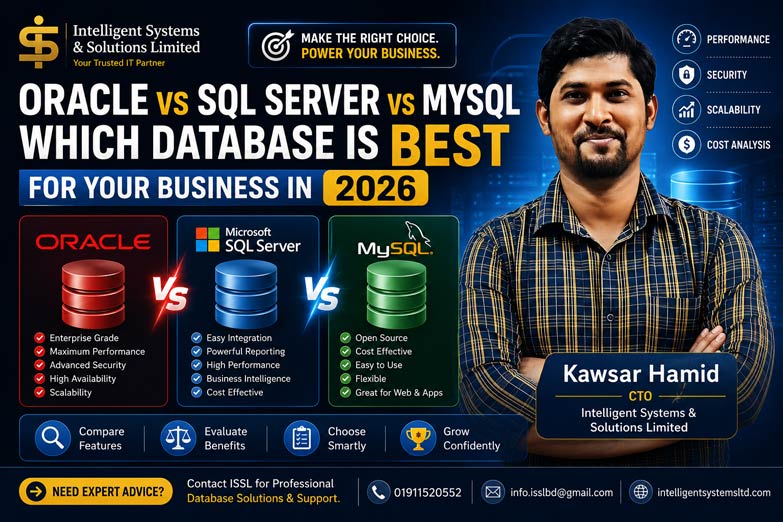
Among the most widely used database platforms today are:
- Oracle Database
- Microsoft SQL Server
- MySQL
Each platform has strengths, weaknesses, and ideal use cases.
This guide will help business leaders, IT managers, and decision-makers determine which solution best fits their needs.
Why Database Selection Matters
Many businesses focus on software features while overlooking the database infrastructure behind them.
However, databases directly impact:
Performance
How fast applications respond.
Scalability
How easily systems support growth.
Security
How effectively sensitive information is protected.
Availability
How reliably systems remain operational.
Cost
How much businesses spend on licenses, maintenance, and administration.
Selecting the right database is a strategic business decision rather than simply a technical choice.
Overview of Oracle Database
Oracle Database is one of the world's most advanced enterprise database management systems.
Large enterprises trust Oracle for mission-critical operations.
Common Oracle Users
- Banks
- Government agencies
- Telecom operators
- Manufacturing corporations
- Large multinational organizations
Key Strengths
- Exceptional scalability
- Enterprise-grade security
- High availability features
- Advanced analytics
- Strong disaster recovery capabilities
Potential Limitations
- Higher licensing costs
- Requires experienced Oracle DBA services
- More complex administration
Oracle is often the preferred choice for organizations where downtime is unacceptable.
Overview of Microsoft SQL Server
Microsoft SQL Server is among the most popular business database platforms.
It combines strong enterprise features with easier administration.
Common SQL Server Users
- Mid-sized enterprises
- ERP users
- Healthcare organizations
- Educational institutions
- Corporate businesses
Key Strengths
- Excellent Microsoft ecosystem integration
- Strong reporting capabilities
- User-friendly management tools
- High security standards
- Reliable performance
Potential Limitations
- Licensing costs can increase with scale
- Some enterprise features require advanced editions
SQL Server is frequently chosen for ERP environments and business applications.
Overview of MySQL
MySQL is one of the most widely used open-source databases globally.
It powers millions of websites and applications.
Common MySQL Users
- Startups
- E-commerce companies
- SaaS businesses
- Web application developers
Key Strengths
- Open-source availability
- Lower costs
- Simplicity
- Broad community support
- Fast deployment
Potential Limitations
- Fewer enterprise features
- Limited advanced security capabilities compared to Oracle
- Less suitable for extremely complex enterprise workloads
MySQL is ideal for businesses seeking cost-effective database solutions.
Performance Comparison
Performance is often the first concern when selecting a database platform.
Database Performance Comparison
| Feature | Oracle | SQL Server | MySQL |
|---|---|---|---|
| Transaction Processing | Excellent | Excellent | Good |
| Large Database Support | Excellent | Very Good | Moderate |
| Reporting Performance | Excellent | Excellent | Good |
| High-Concurrency Workloads | Excellent | Very Good | Moderate |
| Enterprise ERP Support | Excellent | Excellent | Moderate |
Winner for enterprise workloads: Oracle
Winner for business applications: SQL Server
Winner for lightweight systems: MySQL
Security Comparison
Database security is critical for protecting business-critical information.
Security Features Comparison
| Security Feature | Oracle | SQL Server | MySQL |
|---|---|---|---|
| Data Encryption | Advanced | Advanced | Available |
| Auditing | Enterprise Grade | Strong | Basic |
| Access Control | Advanced | Advanced | Moderate |
| Compliance Support | Excellent | Excellent | Moderate |
Winner: Oracle
Close Second: SQL Server
Scalability Comparison
Business growth requires scalable database infrastructure.
Scalability Analysis
Oracle
Designed for massive enterprise environments.
SQL Server
Excellent scalability for most business applications.
MySQL
Suitable for small-to-medium scale environments.
Organizations expecting rapid growth often prefer Oracle or SQL Server.
Cost Comparison
Cost remains a significant factor.
| Database | Cost Level |
|---|---|
| Oracle | High |
| SQL Server | Medium to High |
| MySQL | Low |
MySQL is attractive for startups and smaller businesses.
Oracle delivers premium enterprise capabilities at a premium price.
SQL Server often provides the best balance between features and cost.
Which Database is Best for ERP Systems?
ERP software places heavy demands on databases.
Oracle
Ideal for large enterprise ERP deployments.
SQL Server
Excellent for mid-sized and enterprise ERP systems.
MySQL
Suitable for smaller ERP implementations.
Most ERP environments in Bangladesh operate successfully on SQL Server.
Which Database is Best for Different Industries?
| Industry | Recommended Database |
|---|---|
| Banking | Oracle |
| Government | Oracle |
| Telecommunications | Oracle |
| Manufacturing | Oracle / SQL Server |
| Healthcare | SQL Server |
| Education | SQL Server |
| Trading & Distribution | SQL Server |
| Startups | MySQL |
| E-Commerce | MySQL / SQL Server |
Why Professional Database Management Matters More Than Database Choice
A common misconception is that choosing the best database automatically guarantees success.
The reality is different.
Even the most powerful database can suffer from:
- Poor performance
- Security vulnerabilities
- Downtime
- Data corruption
Without proper management.
Organizations require:
- Database administration
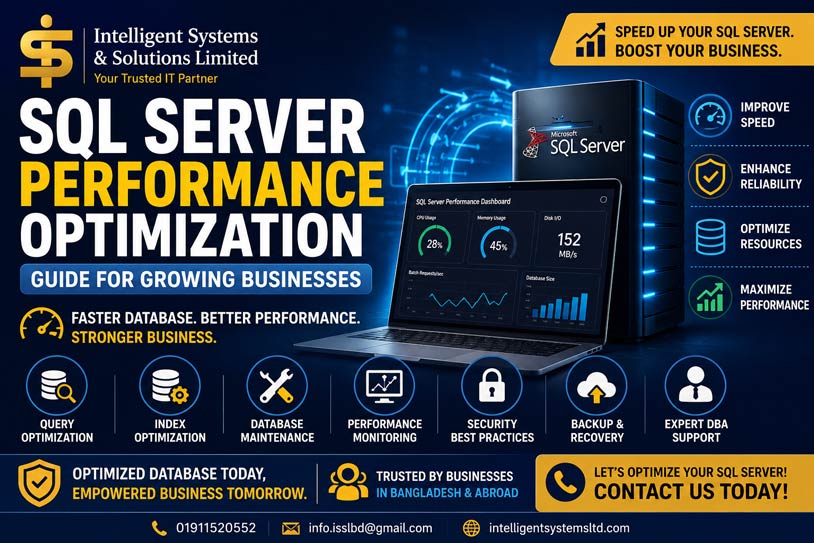
- Performance optimization
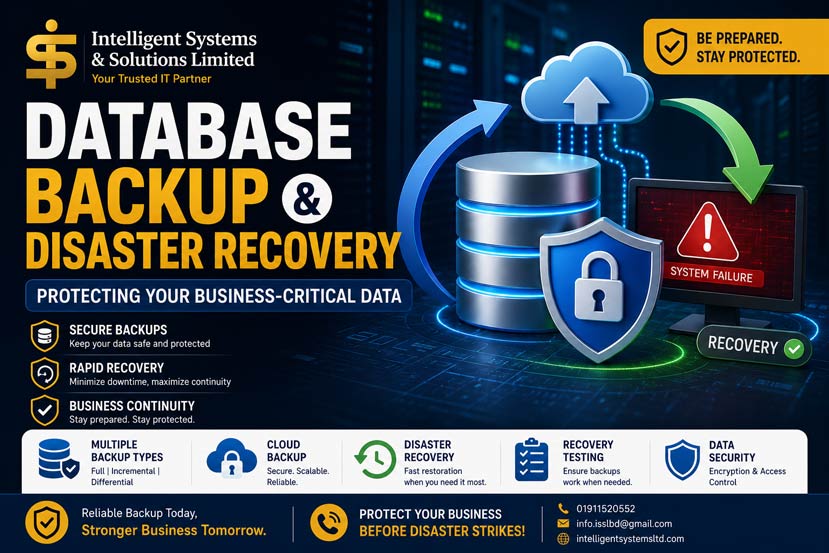
- Backup and recovery planning
- Security monitoring
- Disaster recovery strategies
Professional database management often has a greater impact than the database platform itself.
How ISSL Helps Businesses Choose and Manage Databases
Intelligent Systems and Solutions Limited (ISSL) provides professional database consulting, optimization, and support services.
We help businesses:
- Select the right database platform
- Optimize performance
- Improve security
- Implement backup strategies
- Maintain business continuity
Our experts support:
- Oracle Database
- Microsoft SQL Server
- MySQL
- Enterprise ERP Databases
With experience serving both local and international clients, ISSL helps organizations build secure, scalable, and high-performing database environments.
Final Verdict
There is no single database that is best for every organization.
Choose Oracle if:
- You run enterprise-scale operations.
- Security and availability are top priorities.
- Budget is less restrictive.
Choose SQL Server if:
- You operate ERP systems.
- You need strong performance and business intelligence capabilities.
- You want the best balance of cost and enterprise features.
Choose MySQL if:
- You are a startup or small business.
- Cost is a major consideration.
- Your applications are web-focused.
The best database is the one that aligns with your business goals, operational requirements, and future growth plans.
Need Professional Database Consulting?
Intelligent Systems and Solutions Limited (ISSL)
Professional Oracle Support, SQL Server Optimization, MySQL Administration, Database Security, Backup & Recovery, ERP Database Management, and Enterprise DBA Services.
📞 01911520552
🌐 intelligentsystemsltd.com
Helping Businesses Build Secure, Scalable, and High-Performance Database Environments.