Please fill out the form below, and we will get back to you as soon as possible.
22
Apr
The garments industry is the backbone of Bangladesh’s economy, contributing significantly to exports and employment. With increasing global competition and demand for efficiency, digital transformation is no longer optional. At the heart of this transformation lies effective database management.
From production tracking to inventory control and payroll systems, garments factories rely heavily on data. Without a properly managed database, businesses face delays, errors, and operational inefficiencies that directly impact profitability.
Garments factories handle massive volumes of data every day—orders, raw materials, supplier details, employee records, and shipment tracking. Managing this data manually or through poorly optimized systems leads to:
A well-structured database ensures that all departments—from production to finance—work with accurate, real-time information.
Many garments companies in Bangladesh still struggle with outdated systems or lack of proper database expertise. Some common issues include:
These challenges not only reduce efficiency but also create risks in meeting international buyer requirements.
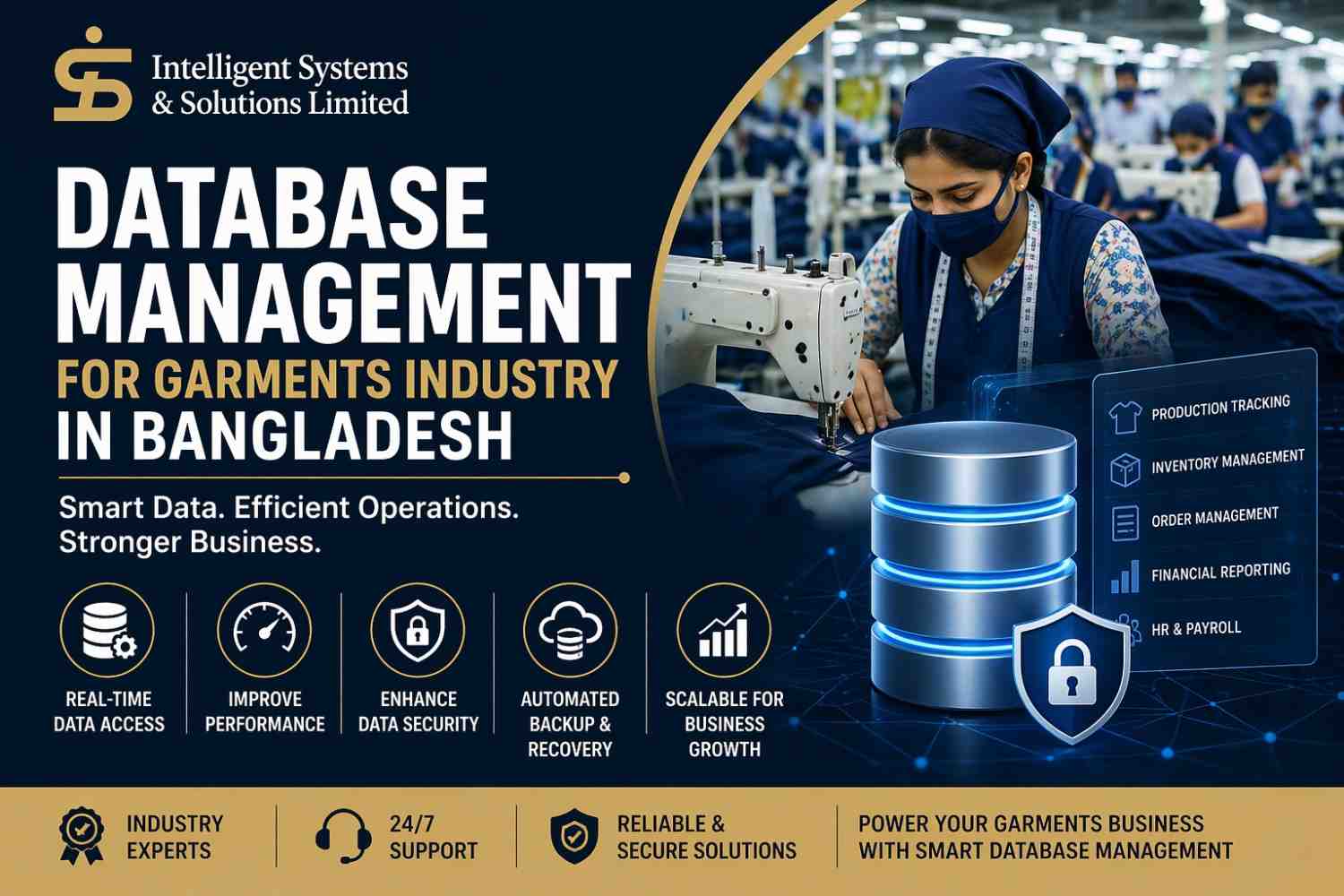
Implementing professional database management solutions can transform operations in the garments sector.
1. Real-Time Data Access
With optimized databases, management can track production, orders, and inventory instantly—leading to faster decision-making.
2. Improved Performance
Database tuning and optimization ensure that ERP systems run smoothly without delays, even during peak operations.
3. Enhanced Security
Sensitive business data, including financial and client information, is protected through advanced security protocols.
4. Backup and Disaster Recovery
Automated backup systems ensure that data is never lost, even in case of system failure.
5. Scalability
As your factory grows, a well-managed database can easily handle increased data load without affecting performance.
Oracle database solutions are widely used in large-scale enterprises due to their reliability and scalability. For garments industries dealing with high transaction volumes, Oracle provides:
With expert Oracle database management, garments businesses can ensure uninterrupted operations and better control over their processes.
Managing a database is not just about storing data—it requires continuous monitoring, optimization, and maintenance. Many garments companies lack in-house expertise, which leads to long-term inefficiencies.
By partnering with professional database management service providers, businesses can focus on production while experts handle performance, security, and system reliability.